The honest answer is: a properly applied iron-on patch does not come off in the wash. That is the entire point of the product. A patch that peels off in the dryer on the first wash was almost never a bad patch — it was a bad application, and the laundry just revealed it.
So this guide covers two things: why patches fail in the wash (there are only about six real reasons), and exactly how to make sure yours does not become one of them.
The six reasons patches come off in the wash
| Reason | How it fails | How to avoid it |
|---|---|---|
| 1. Pressed too briefly | Adhesive never fully flowed into the fibre | Full press time for the fabric (25–40s on denim) |
| 2. Washed too soon | Water gets under the edge before the bond sets | Wait 24–48 hours |
| 3. Hot water | Softens the adhesive and loosens fibres | Cold or cool wash only |
| 4. Fabric softener | Leaves a film that blocks adhesion | Skip it, always |
| 5. Tumble dried on high | Heat softens the glue; tumbling levers the edge | Low heat, or air dry |
| 6. Fabric moved during the press | Only partial contact, so only partial bond | Flat surface, no movement |
Why the washing machine is a test, not a punishment
Cold water and gentle agitation are actually mild conditions. The adhesive on an iron-on patch is a thermoplastic that re-softens above roughly 60°C. A hot wash cycle hits that threshold, and the bond has to survive it. If a patch survives a hot cycle, it will survive anything.
The variables that matter most, in order:
- Water temperature — the single biggest factor. Cold or cool (below 30°C / 86°F) is the safe zone.
- Drying heat — high tumble heat is the second biggest. This is the one people forget.
- Mechanical stress — tumbling, snagging on zippers, and the flexing of a garment as you wear it. Real, but much less important than temperature.
- Detergent chemistry — mild detergent is fine. Fabric softener and dryer sheets are the problem.
The wash routine that makes patches last
- Turn the garment inside out. This is the single most effective thing you can do. The patch faces the inside of the drum, so it takes the beating instead of your shirt, and it does not rub against other clothing that could catch a corner.
- Use cold water — 30°C (86°F) or below.
- Choose a gentle cycle. If your machine has a “delicates” or “hand wash” setting, use it.
- Use mild detergent and a small amount. Heavy detergent is not needed for a patched garment and residue works against the adhesive.
- Skip fabric softener and dryer sheets completely. Softener coats the fibres in a film that prevents new patches from bonding and, over time, undermines the existing one.
- Close fastenings. Zip the jacket, button the bag, and pull the hood drawstrings in. A zip snag will lift a corner before heat ever gets a chance.
- Dry on low, or air dry. Low heat, inside out, and take it out of the dryer slightly damp. Do not tumble dry on high.
How long can you expect a patch to last?
| Application | Care routine | Expected life |
|---|---|---|
| Ironed onto cotton / denim | Cold, inside out, low dry | Many years |
| Ironed onto polyester | Cold, inside out, low dry | 1–3 years |
| Self-adhesive only | Cold, inside out, low dry | Months to a year |
| Ironed + stitched | Any reasonable wash | Effectively permanent |
What to do if a patch starts lifting
Catch it early and it is usually recoverable. See our peeling patch repair guide for the full method, but the short version:
- Do not peel it off yourself. Every lift you create weakens the remaining bond.
- Press it back down with a cotton barrier cloth for 15–20 seconds.
- If the corner keeps lifting, remove it fully and reapply, or trim the lifting edge and stitch the patch down.
- If the adhesive is dead — the patch no longer holds even when pressed — apply a small amount of fabric-safe glue under the lifted area, or stitch it.
Signs your patch is fine, not failing
Two things that look like failure but are not:
- The edges look slightly raised after washing. Fabric moves. A patch that has been washed a hundred times and still needs no attention is working correctly.
- The colours look different from when you applied it. The chenille pile flattens slightly with wear and picks up a little of the fabric’s colour. This is normal patina, not damage.
Dry cleaning
Do not dry clean a garment with iron-on patches. The solvents used in dry cleaning can soften or dissolve the adhesive, and the pressing and tumbling at the end of the cycle is exactly the combination that lifts edges. If the garment is dry-clean only, sew the patches on instead.
Frequently asked questions
Do iron-on patches come off in the wash?
Properly applied iron-on patches do not come off in the wash. A patch that peels off was under-pressed, washed too soon, washed hot, or dried on high heat. Wash cold, inside out, skip fabric softener, and dry low.
Why is my patch coming off in the dryer?
High dryer heat softens the adhesive and the tumbling action levers the edges up. Dry on low or air dry instead, and turn the garment inside out so the patch faces the inside of the drum.
How long should I wait before washing a patched garment?
At least 24 to 48 hours. The adhesive needs that time to fully flow into the fibre. Washing earlier lets water get under the edge of the patch before the bond has set.
Does fabric softener affect iron-on patches?
Yes, significantly. Softener leaves a film on the fibres that blocks adhesion. It undermines new applications and, over many washes, weakens existing ones. Skip fabric softener and dryer sheets on any patched garment.
Can I tumble dry a jacket with patches?
Yes, on low heat only. High heat is the single most common cause of iron-on patch failure over time. Take the garment out slightly damp and reshape it.
Should I turn my jacket inside out before washing it?
Yes. It is the single most effective thing you can do: the patch takes the drum’s beating instead of the rest of the garment, and it will not catch on other clothing or a zip.
Shop the A–Z chenille letter sets
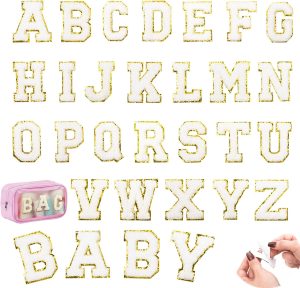
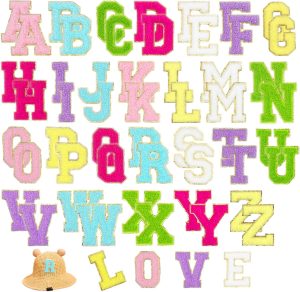
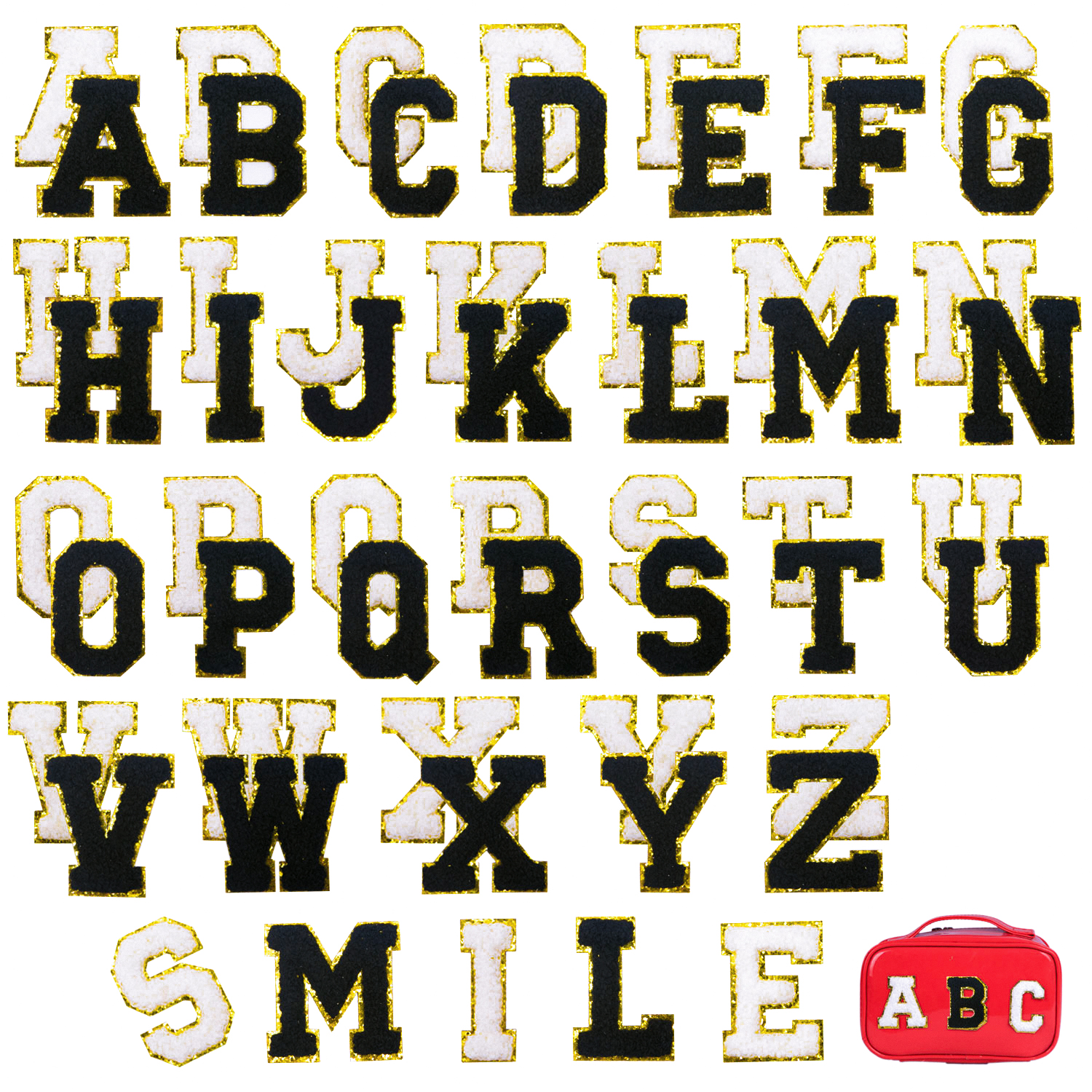
Every set is dense dimensional chenille with a metallic gold embroidered border, a strong self-adhesive backing, and an iron-on layer for permanence. Pick the size that fits your project.
Related reading
- Patch care and troubleshooting — the full hub for lifting, peeling, staining and removal.
- The complete patch application guide — get it right the first time.
- Iron-on temperature calculator — pick your fabric, get the exact heat setting and press time.
- How to wash and dry patches the right way — the care routine that makes patches last.