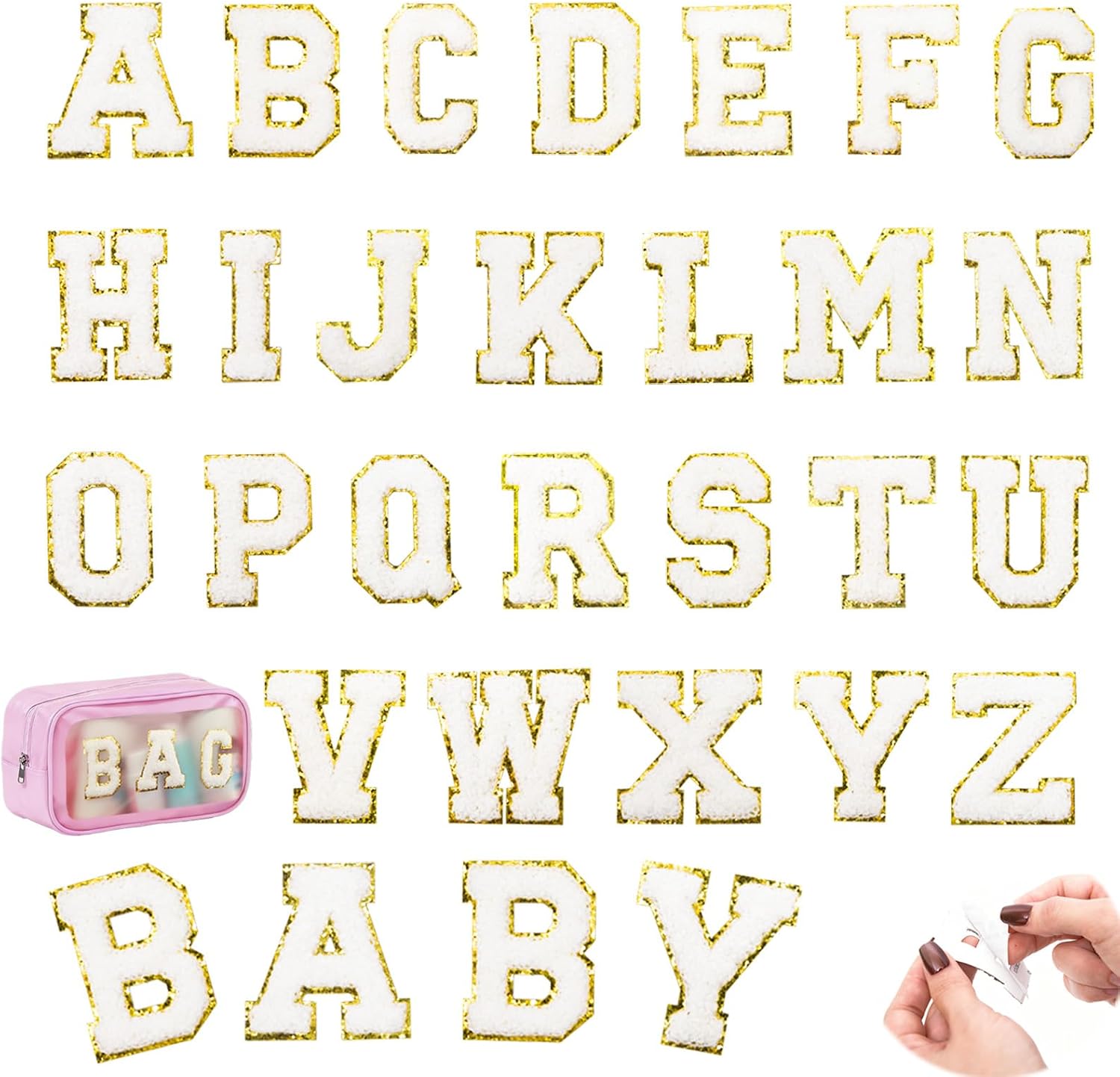
Denim is the easiest garment to put letter patches on, and also the one where people most often make a mistake that costs them the patch. Denim is heavy cotton twill, so it takes heat beautifully — but the indigo dye, the rigid weave, and the seams all react differently than you would expect. Get the press right and a patch will stay on through years of washing. Get it wrong and you will either lift the colour, leave a permanent shine, or watch the patch peel off inside a week.
This guide covers the exact temperature, press time, and pressure for denim, plus how to handle the four spots that cause most failures: the waistband, the pocket seam, the belt loop area, and the seat where the fabric sits under tension.
Why denim works well with iron-on patches
Denim is a plain-weave cotton twill with a high thread count and a slightly fuzzy, brushed surface. Two properties matter for adhesion:
- Cotton fibres tolerate heat well. Cotton scorches only well past 200°C, so a standard cotton setting gives you a wide safety margin.
- The fuzzy nap gives the adhesive something to grip. A flat synthetic surface is harder to bond to than a slightly textured cotton one.
The flip side is that denim is thick. A patch pressed only 10 seconds will feel stuck and then fail in the wash, because the heat never reached the adhesive through the full weight of the twill.
Exact settings for denim
| Setting | Value | Note |
|---|---|---|
| Temperature | 150–165°C (300–330°F) | Cotton setting, no steam |
| Press time | 25–40 seconds per patch | Longer than you think — denim is thick |
| Pressure | Firm, with the iron flat | Do not use the steam function |
| Protective sheet | Thin cotton cloth | Protects the gold trim from shine |
| Cool-down | 30 seconds, then move | Moving too early causes lift |
Step by step: ironing letters onto jeans
- Wash and dry the jeans first. New denim shrinks, and a patch applied to unwashed denim will wrinkle or gap after the first wash. Wash once, dry, then patch.
- Iron the area while the jeans are still slightly warm. A warm fabric accepts heat better. If they came straight out of the dryer, that is ideal.
- Lay the jeans flat on a hard surface. Do not patch a jean while wearing it — you cannot get flat pressure, and the curve of a thigh guarantees a poor bond.
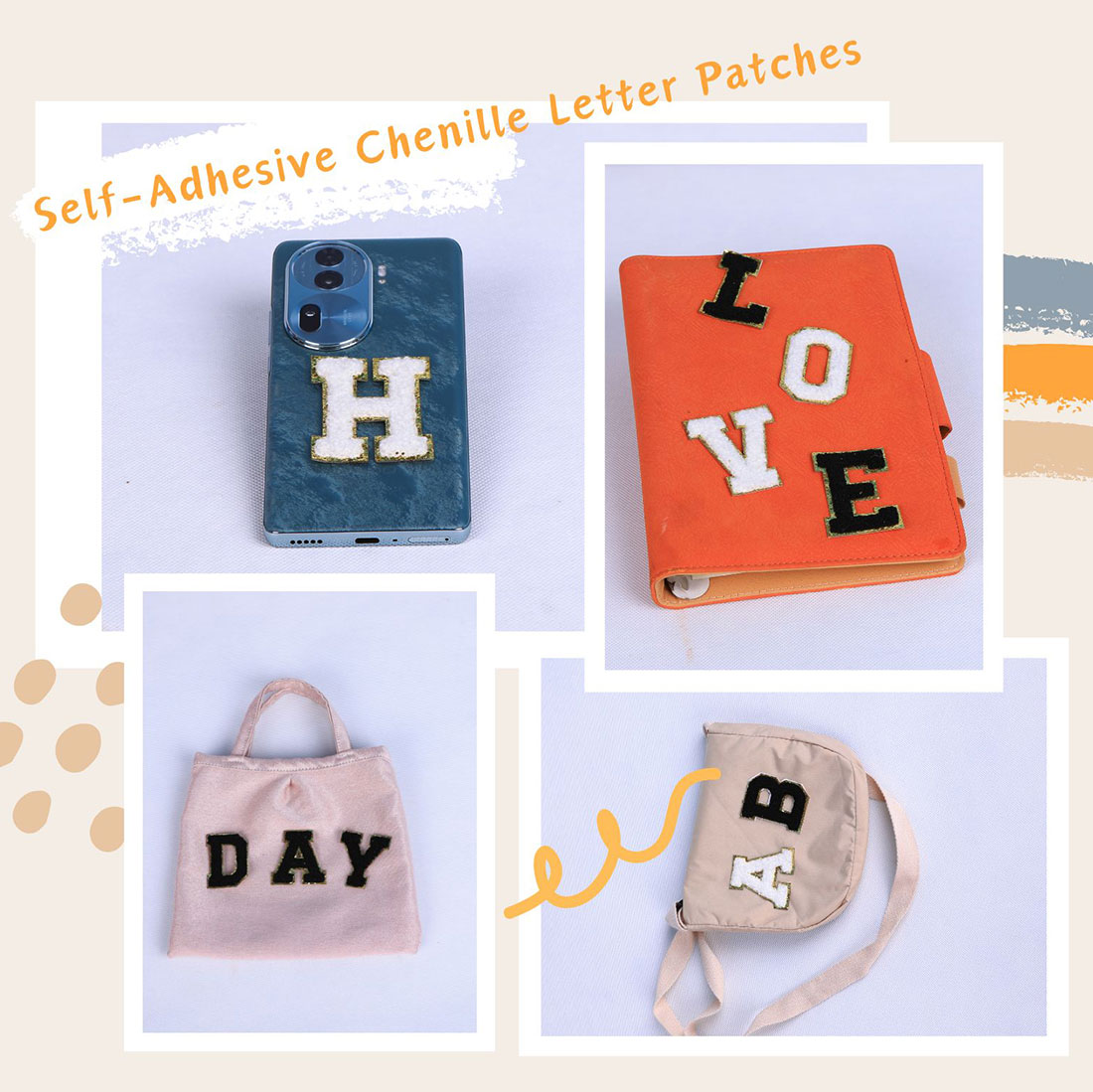
- Peel and position the patch. YTONN letter patches have a peel-and-stick adhesive backing, so you can position the whole word before you press anything. Stand back, check the spacing, and only then heat.
- Cover with a thin cotton cloth. This is the single most important step. Direct heat on chenille flattens the pile and can melt the metallic gold thread into a dull smear. The cloth buffers it.
- Press firmly for 25–40 seconds. Move the iron slowly across the patch. Do not slide it in circles — sliding drags the patch out of position.
- Wait 30 seconds before moving. The adhesive sets as it cools. Lifting early while it is still hot is the number one cause of peeling corners.
- Repeat for each letter. Peeling the backing and re-positioning each one takes a minute, but a straight, evenly spaced word is what makes the whole thing look deliberate.
The four places denim patches fail
1. The waistband
The waistband is doubled fabric with a fused interlining, and it flexes constantly when you sit. Any patch there will eventually lever itself loose at the edges. Press it as hot as you safely can, and if it must live there, add a few stitches through the patch corners with thread that matches the denim.
2. Pocket seams and bar tacks
Seams are raised and thick. A patch that spans a seam has one half on flat fabric and one half on a ridge, and the ridge is where the bond breaks. Either keep patches clear of the 1 cm band around a seam, or press the patch so it straddles the seam and then hit the seam line a second time with extra pressure.
3. The belt loop area
Same problem, opposite geometry: the loop adds a third thickness. Plan your word so it sits below the loops rather than across them.
4. The seat, where the fabric is under tension
Sitting stretches the seat of the jeans. A patch there carries load every time you sit down, and the adhesive is working against stretch the whole time. For a patch that must live on the seat, sew it down after pressing. It is 30 seconds of work that adds years of life.
Colour changes and the shine problem
Two things can happen to indigo denim under heat:
- Shine. Over-pressed denim develops a glossy flat spot from the fibres being flattened. The fix is pressure, not more heat: use firm pressure and the minimum time that works, with the cloth barrier in place.
- Colour bleed. Hot water and steam can push indigo dye to the surface and transfer it to your patch, or to the cloth barrier. Use a dry iron with no steam, and press on the reverse of the denim if the colour is very dark or the jeans are new and unwashed.
Do not iron a patch onto a garment that has been freshly dyed or bleached — wait a few washes first.
Making it last: after the press
A correctly applied patch on denim should outlast many washes. To get there:
- Wait 24 to 48 hours before the first wash. The adhesive needs time to fully flow into the fibre.
- Wash cold, inside out, on a gentle cycle.
- Use mild detergent and skip fabric softener — softener leaves a film that reduces adhesion.
- Line dry or tumble dry low. High heat in the dryer is what actually kills iron-on patches.
- More detail in our patch care guide and how to wash patches guide.
Common mistakes
| Mistake | Result | Fix |
|---|---|---|
| Pressing for 5–10 seconds | Peels off in the wash | Hold 25–40 seconds for denim |
| No protective cloth | Dull, flattened gold trim | Always use a thin cotton barrier |
| Using steam | Water spots, dye bleed | Dry iron only |
| Patching new, unwashed denim | Wrinkles as the denim shrinks | Wash and dry first |
| Moving the patch before it cools | Lifted corners | Wait 30 seconds |
Frequently asked questions
Do iron-on patches work on denim?
Yes — denim is one of the best surfaces for iron-on patches. It is heavy cotton twill, so it tolerates the high temperatures an iron-on adhesive needs. Use 150–165°C (300–330°F) with no steam, press for 25–40 seconds under a thin cotton cloth, and let it cool for 30 seconds before moving it.
How long should I iron a patch on jeans?
Press each patch for 25 to 40 seconds. Denim is thicker than most fabric, and a short press is the most common reason patches peel off jeans after a few washes. The adhesive needs sustained heat and pressure to flow into the cotton fibres.
Can I iron patches onto dark denim without fading it?
Yes, if you use a dry iron with no steam and press on the inside of the garment where possible. Indigo can bleed onto a hot surface, and a cotton barrier cloth protects both the denim and the gold trim. Always test an inside seam first if the jeans are new or heavily dyed.
Should I wash jeans before applying patches?
Yes. Denim shrinks significantly in its first few washes, and a patch applied to unwashed denim will wrinkle or gap afterwards. Wash and dry the jeans once, then apply the patches.
Will patches come off in the wash?
Properly applied patches should stay on through many washes. Wait 24 to 48 hours before washing, then wash cold and inside out, skip fabric softener, and dry on low. If a patch lifts, it was almost always under-pressed or moved before it cooled.
Can I put letters on the waistband of my jeans?
You can, but the waistband flexes every time you sit and the doubled fabric makes the bond weaker. Press it thoroughly and add a few stitches through the corners with matching thread for a permanent result.
Shop the A–Z chenille letter sets
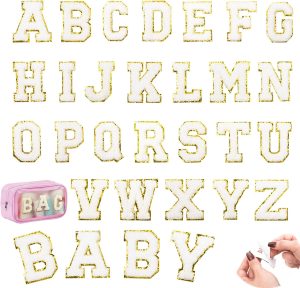
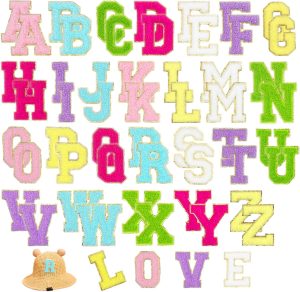
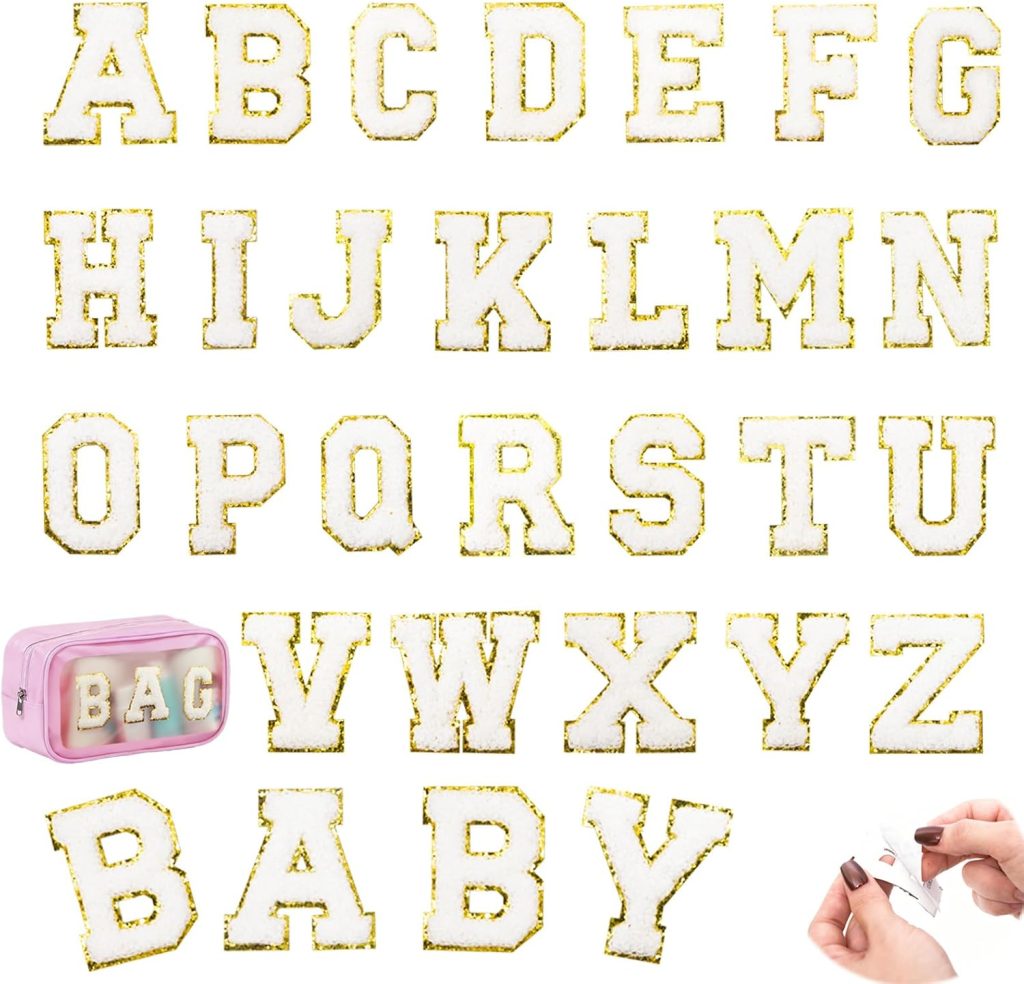
Every set is dense dimensional chenille with a metallic gold embroidered border, a strong self-adhesive backing, and an iron-on layer for permanence. Pick the size that fits your project.
Related reading
- The complete patch application guide — every fabric, every method, one page.
- Patch care and troubleshooting — what to do when a patch lifts, peels, or stains.
- Iron-on temperature calculator — pick your fabric, get the exact heat setting and press time.
- What is chenille embroidery? — how the fuzzy yarn and gold trim are made.