
Not all great embroidery is colorful. Two European traditions built entire aesthetics on a single color: whitework, where white thread meets white cloth, and blackwork, where black thread draws on pale linen. Both look deceptively simple and are secretly demanding. Here is what makes each elegant — and how their restraint still inspires.
Two Monochrome Classics
Monochrome embroidery relies on texture, line, and light rather than hue. Without color to hide behind, every stitch must earn its place. That discipline is exactly why whitework and blackwork have stayed in fashion for centuries, from royal christening gowns to Tudor portraits.
Whitework — Tone-on-Tone Refinement
Whitework is any embroidery in white thread on white fabric. Its high point is European peasant and court tradition: the open, lacy Hardanger of Norway, the raised Mountmellick of Ireland, the delicate broderie anglaise (eyelet) loved in France and England, and the sheer Carrickmacross lace. French whitework (broderie blanche) was so refined it decorated imperial baptismal robes. The effect is sculptural — light passes through cutwork, shadow pools in padded satin.
Blackwork — The Tudor Knot Garden in Thread
Blackwork, also called Spanish blackwork (though it flourished in Tudor England), uses black silk thread in backstitch and holbein (double-running) stitch to fill outlined shapes with geometric diamond fills. It became iconic via portraits of Henry VIII's queens, especially Catherine of Aragon and Elizabeth I, whose gowns seem paved with stitched knot gardens. The look is graphic and architectural — embroidery that reads like ironwork or tiling.
Techniques Within: Hardanger, Pulled & Drawn Thread
Both traditions share a toolkit of open techniques. In pulled thread, stitches draw the weave tight to make lacy grids. In drawn thread, threads are removed and the rest bound into lattices. Hardanger combines both with kloster blocks and eyelets for a crisp, geometric lace. These methods reward patience and precision — the opposite of quick, but deeply satisfying.
Carrying Elegance Into Everyday Pieces
Whitework and blackwork show that minimal can be maximal. If you love the idea of a single, deliberate mark on cloth but want results today, a gold-trim chenille letter is the modern shorthand: one confident element, total impact. Pair it with the patience these traditions teach and your plainest shirt becomes a statement.
One confident mark, total impact
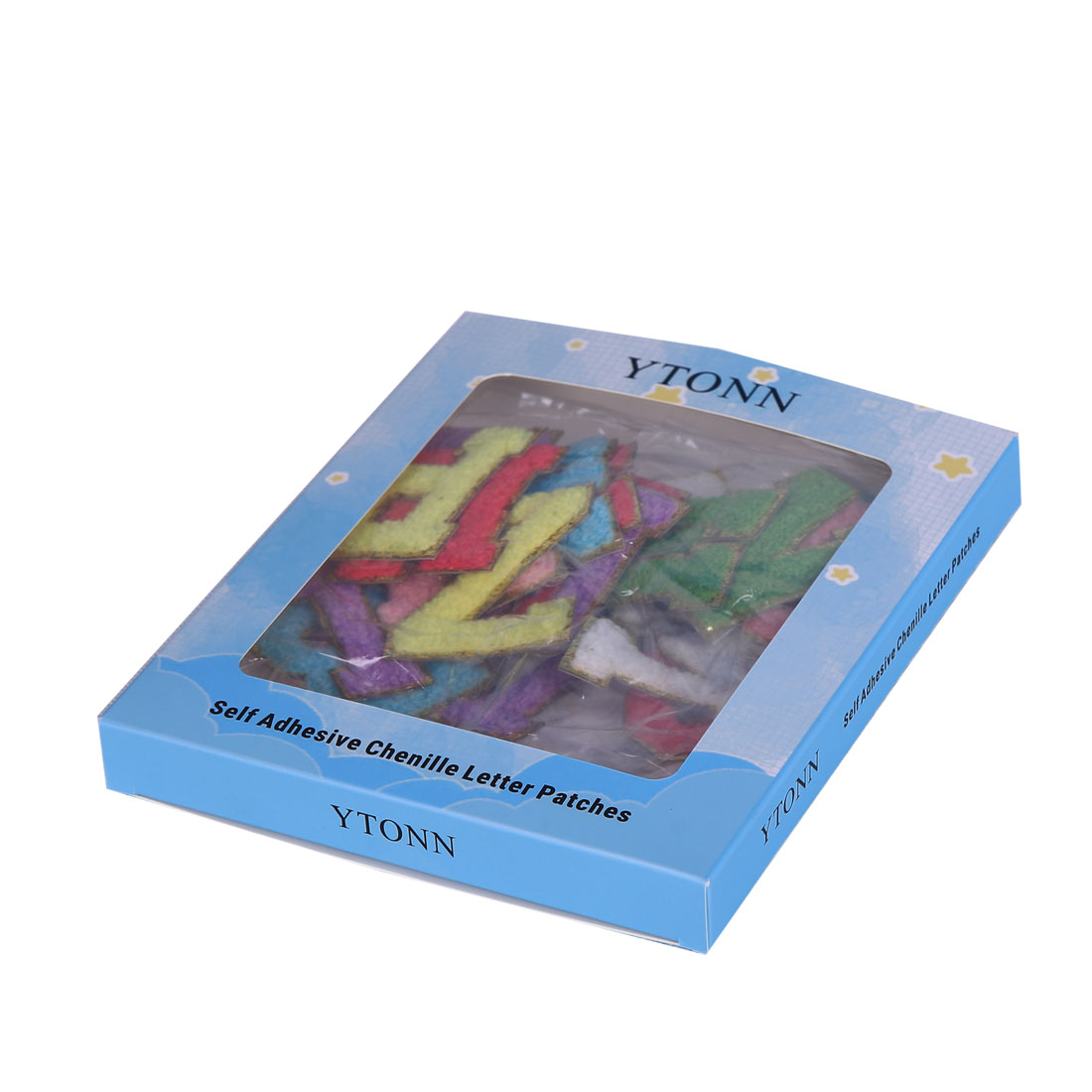
Make a deliberate statement with YTONN's 52-piece chenille letter patch set — self-adhesive, iron-on A to Z appliques. See the DIY and craft patch collection.
Conclusion
Whitework and blackwork prove that color is optional — intention is not. Whether you stitch in monochrome or iron on a bold letter, you are practicing restraint as style. Explore more in our embroidery journal.
