Walk into any craft store and you will find three kinds of letter patches that look superficially similar and behave nothing alike. Chenille patches are plush and fuzzy with a raised gold border. Embroidered patches are flat and detailed. Woven patches are tight, thin, and cheap. Each is made for a different job, and picking the wrong one is why people end up disappointed with a patch that “does not look right”.
This guide compares the three by how they are made, how they look, how they wear, and what each one is genuinely good at.
The three types at a glance
| Factor | Chenille | Embroidered | Woven |
|---|---|---|---|
| Surface | Raised, fuzzy pile | Flat, dense stitch | Flat, tightly woven |
| Thickness | Thickest (~3 mm) | Thin (~1 mm) | Thinnest |
| Detail level | Bold shapes only | Fine, can do text | Moderate |
| Letter size | 2–4 in | 0.5–2 in | 0.75–1.5 in |
| Reads from distance | Excellent | Poor | Moderate |
| Softness | Very soft, tactile | Firm | Slightly stiff |
| Price | Highest | Mid | Lowest |
| Best for | Varsity letters, bold statements | Logos, fine text, small badges | High-volume, small sizes |
Chenille: the premium choice for letters
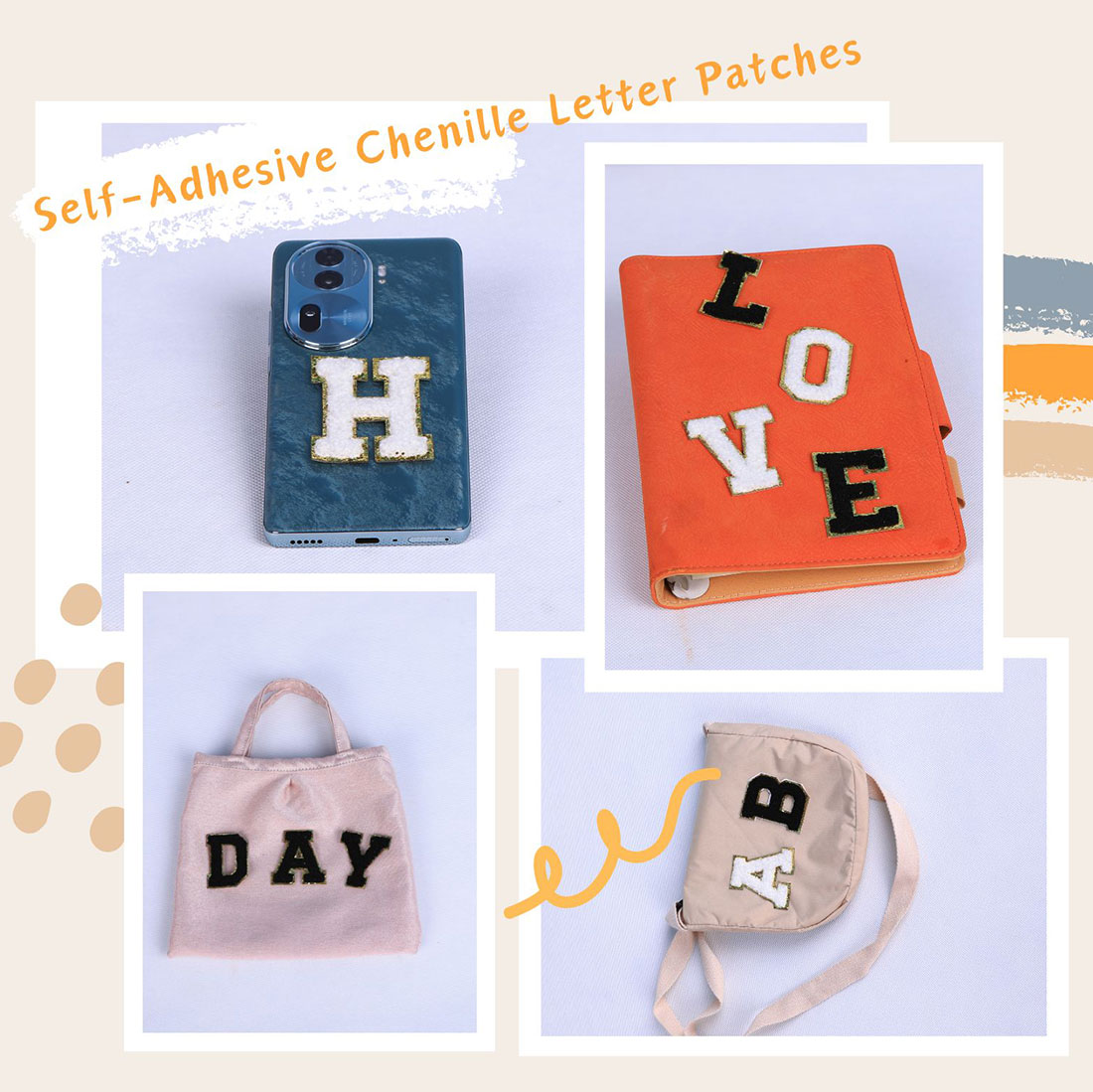
Chenille is a yarn spun with a fuzzy pile, stitched in tight loops onto a felt base with a chain-stitch edge, then usually framed with a second felt layer cut slightly larger to form a contrasting border. That construction is why a chenille letter looks like a piece of vintage sportswear rather than a sticker.
What chenille is genuinely best at:
- Bold single letters and short names. The pile catches light and reads clearly from across a street.
- The varsity look specifically. If you want a letterman jacket to look authentic, chenille is the only material that does it.
- Touch. A chenille patch is soft and dimensional — people notice it with their hand before their eye.
- A premium gift. The gold trim and raised pile signal quality in a way flat patches cannot.
Where chenille is the wrong choice: fine detail, small text, thin fabrics where the thickness is a problem, and tight budgets. A chenille patch on a cotton t-shirt collar will feel bulky and stiff.
Embroidered: when detail matters more than impact
Embroidered patches use ordinary thread stitched on a backing, which means they can render fine detail — a mascot, a small word, a logo, a number. They are thin, which makes them far more comfortable on collars, cuffs, and close-fitting garments.
What embroidered is genuinely best at:
- Logos and mascots that need recognisable detail.
- Small text — a word, a date, a number.
- Thin, close-fit garments where a 3 mm chenille patch would bulge.
- Lightweight fabrics where patch thickness changes the drape.
Where embroidered is the wrong choice: a big varsity letter. At 3 inches tall, an embroidered letter looks thin and flat next to a chenille one, and it will not read from a distance.
Woven: the volume option
Woven patches are made on a loom, which makes them fast and cheap in quantity. They are thin, hold their shape well, and are available in very small sizes. They are used for everything from military insignia to mass-market promotional giveaways.
What woven is genuinely best at:
- Very small sizes — a woven 0.75 inch patch is common; chenille at that size loses its texture entirely.
- Sharp edges and very flat profiles.
- Large quantities where unit cost matters more than feel.
Where woven is the wrong choice: anything where you want a premium look. Woven patches read as mass-produced, and they do not have the tactile quality that makes a letterman jacket feel authentic.
Choosing by what you are making
| Your project | Best type | Why |
|---|---|---|
| A varsity jacket with your initial | Chenille | The entire tradition is built on chenille letters |
| A name across a backpack | Chenille | Bold and readable, and the backpack can take thickness |
| A small chest logo on a t-shirt | Embroidered | Thin enough not to distort the drape |
| A team mascot with detail | Embroidered | Can render fine internal detail |
| A pet name on a collar | Embroidered | Small and comfortable |
| 50 gifts for a team | Woven | Unit cost at volume |
| A cap with one bold letter | Chenille | The one style that works at that scale |
Which type should you buy for letters?
For letter patches specifically, the answer is chenille — and it is not close. The reason is structural, not aesthetic. Letters need to read from a distance, which means they need high contrast between the letter and the background, which means they need a thick, light-catching pile. A flat embroidered letter at 2 inches simply does not have that.
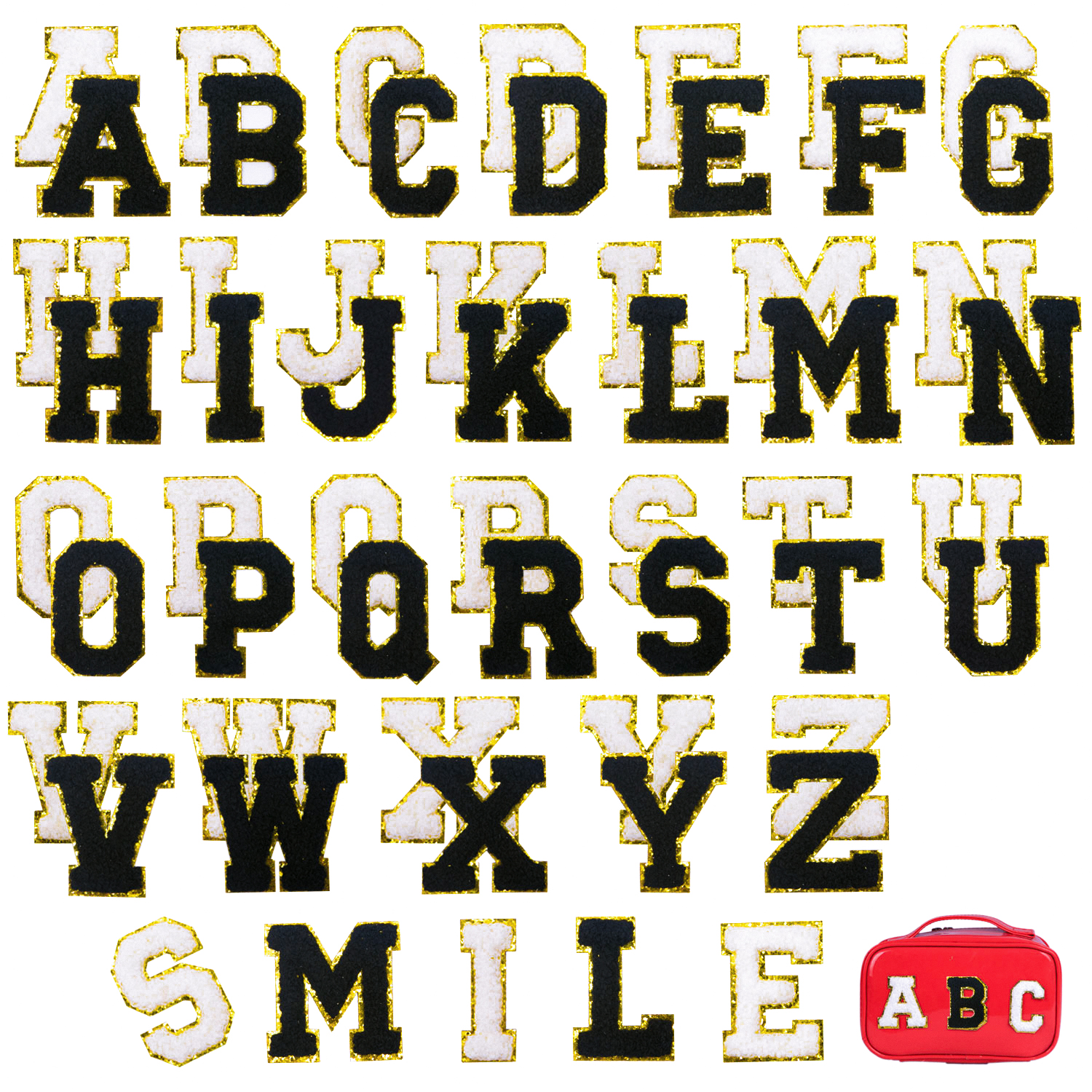
YTONN makes chenille letter patches in four colourways with a metallic gold embroidered border, a strong self-adhesive backing, and an iron-on layer for permanence. See all four sets on the chenille letter patches hub, or preview your name before you buy with the letter layout previewer.
Common mistakes
| Mistake | Result | Fix |
|---|---|---|
| Buying flat patches for a varsity letter | Looks thin, does not read | Chenille for letters, always |
| Chenille on a t-shirt collar | Bulky, stiff, uncomfortable | Embroidered for thin, close-fit garments |
| A woven patch on a letterman jacket | Kills the whole look | Match the material to the tradition |
| Embroidered patch for a big single letter | Disappears at distance | Bold letters need chenille |
| Judging detail quality on a chenille patch | Expecting fine text that cannot exist | Chenille is for bold shapes by design |
Frequently asked questions
What is the difference between chenille and embroidered patches?
Chenille uses a fuzzy yarn stitched in raised loops onto a felt base, which gives a thick, plush, light-catching surface. Embroidered patches use ordinary thread stitched flat, which makes them thinner and able to render fine detail. Chenille is for bold letters; embroidered is for logos and small text.
Are chenille patches better than embroidered ones?
For letter patches, yes. Letters need to read from a distance, which requires a thick, high-contrast pile that only chenille provides. For fine detail, small text, or thin garments, embroidered is the better choice.
Are woven patches lower quality?
They are a different product rather than a worse one. Woven patches are made on a loom, which makes them thin, inexpensive at volume, and available in very small sizes. They are the right choice for high-volume giveaways and tiny badges, but they do not have the premium look of chenille.
Will a chenille patch flatten over time?
The pile compresses slightly with friction and pressure, which is normal wear rather than a fault. As long as the patch is still attached, the bond is working. Avoid pressing a chenille patch directly with an iron, because that flattens the pile permanently.
Can I put a chenille patch on a t-shirt?
You can, but a 3 mm chenille patch on a soft cotton t-shirt feels bulky, especially around a collar or on a close fit. For t-shirts, embroidered patches are the more comfortable choice. Reserve chenille for outerwear, denim, caps and bags.
Which letter colour should I pick for a chenille patch?
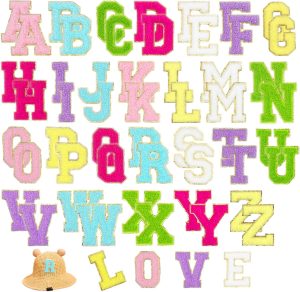
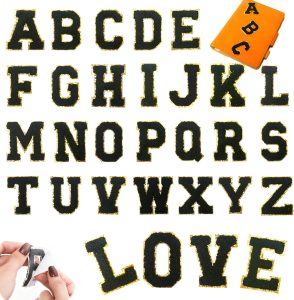
Match the contrast to the garment. White with gold trim on dark denim, navy and black jackets; black with gold trim on light denim and cream canvas. The 52-piece multicolor pack gives you two of every letter in five colours if you want the option to change.
Shop the A–Z chenille letter sets
Every set is dense dimensional chenille with a metallic gold embroidered border, a strong self-adhesive backing, and an iron-on layer for permanence. Pick the size that fits your project.
Related reading
- Varsity letter guide — placement, size and spacing rules.
- The complete patch application guide — every fabric, every method.
- Patch care and troubleshooting — what to do when a patch lifts or peels.
- What is chenille embroidery? — how the fuzzy yarn and gold trim are made.
- All chenille letter sets — the four colourways side by side.
Related guides
- Varsity Letter Guide — placement, sizing, spacing and colour rules for letter patches.
- Iron-On vs Sewn Patches — the other side of the buying decision.
- Letter Layout Previewer — see your layout at true scale and know how many sets to buy.