
Some crafts are born in comfort; Irish crochet lace was born in hunger. In the darkest years of the 1840s Irish Great Famine, a needle and a ball of cotton became a way for families to eat. The result is one of the most romantic lace traditions in the world.
Necessity Becomes Art
As the potato famine ravaged Ireland, convents and landed women taught crochet lace as a way for poor families to earn money. The technique imitated the expensive Venetian point lace that few could afford, but in crochet it could be made far more quickly. Sales to Britain and America fed households when fields could not.
How Irish Crochet Is Built
Unlike bobbin lace, Irish crochet is worked with a hook. Makers first crochet individual motifs — roses, shamrocks, oak leaves, grapes — then join them with a fine, web-like mesh background. Because motifs could be made separately and assembled, whole communities could divide the labor, and a single cloth became a collaboration of many hands.
A Craft That Outlived Its Origin
When the famine passed, Irish crochet did not vanish — it became a point of national pride and a sought-after bridal and ecclesiastical lace. Its raised, three-dimensional flowers still read as distinctly Irish, and revivals keep the tradition alive today.
Add Lace-Like Detail Today
The Irish crochet instinct — decorate cloth with delicate, raised motifs — lives on in modern DIY. A chenille patch gives that same dimensional, ornamental lift, minus the famine-era labor.
Ornamental lift, modern speed
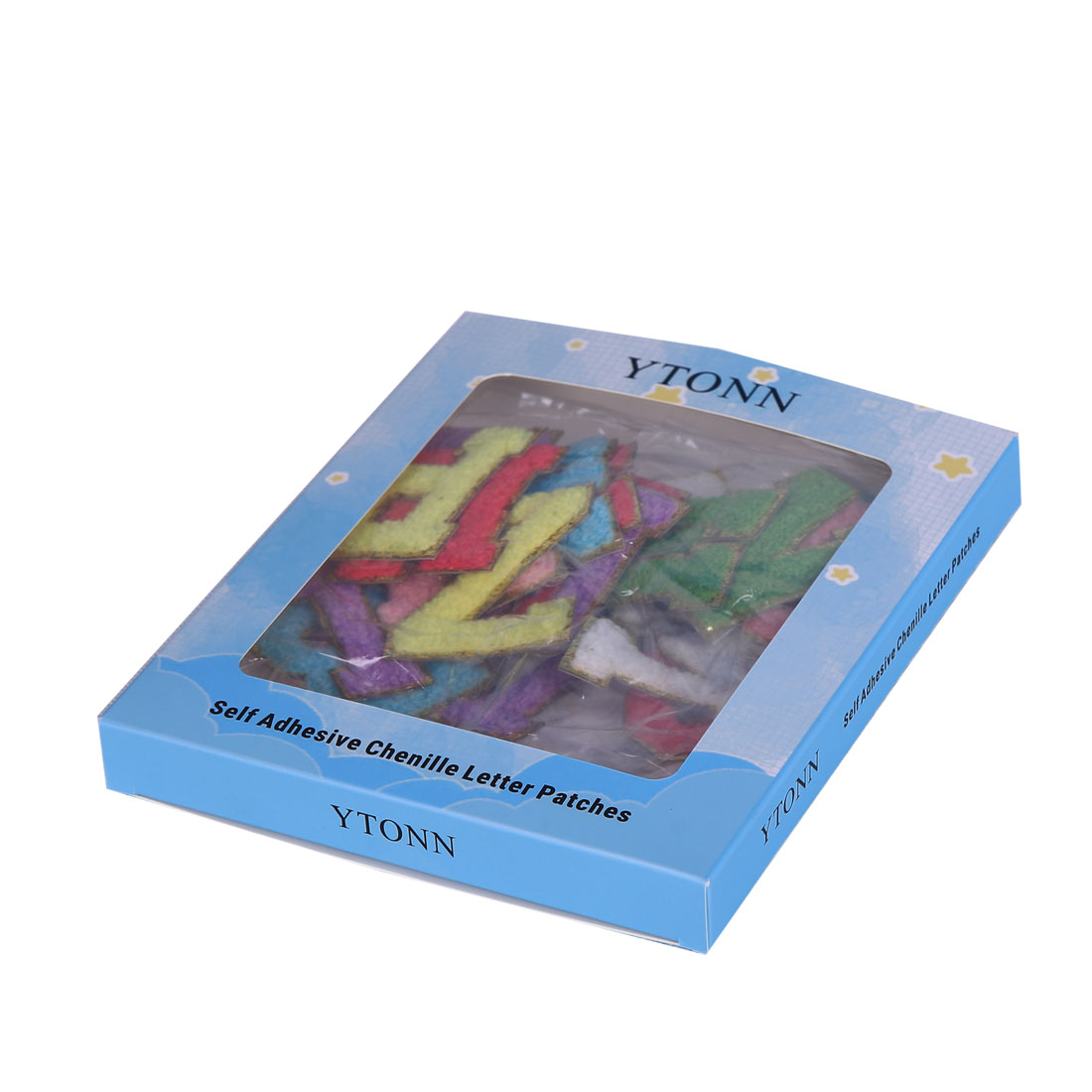
Decorate your gear with YTONN's 52-piece chenille letter patch set — self-adhesive, iron-on A to Z appliques. See the DIY and craft patch collection.
Conclusion
Irish crochet lace is proof that even hardship can spin beauty. Explore more in our embroidery journal.
