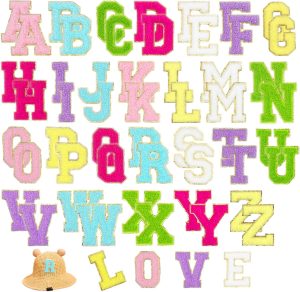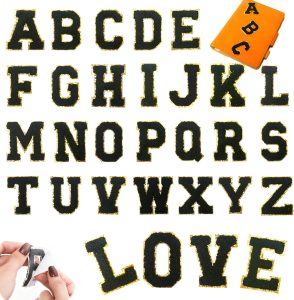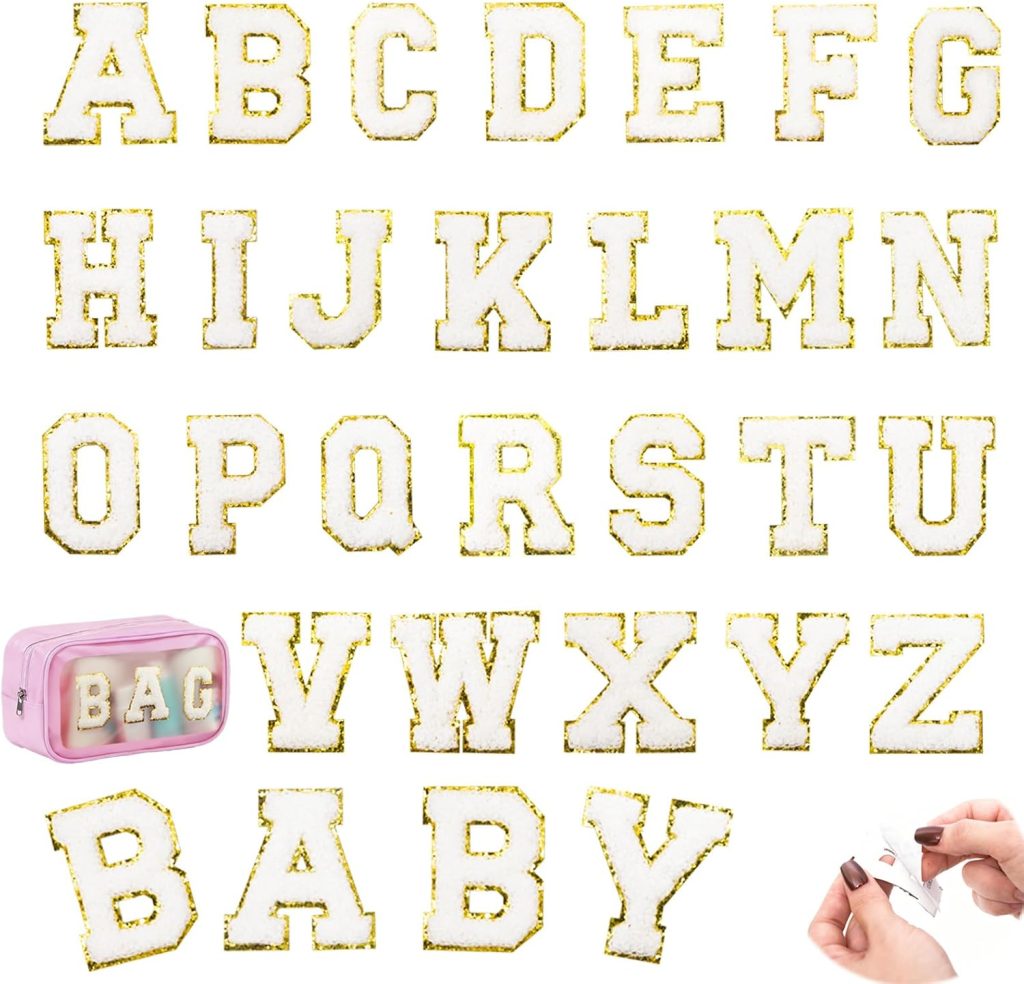
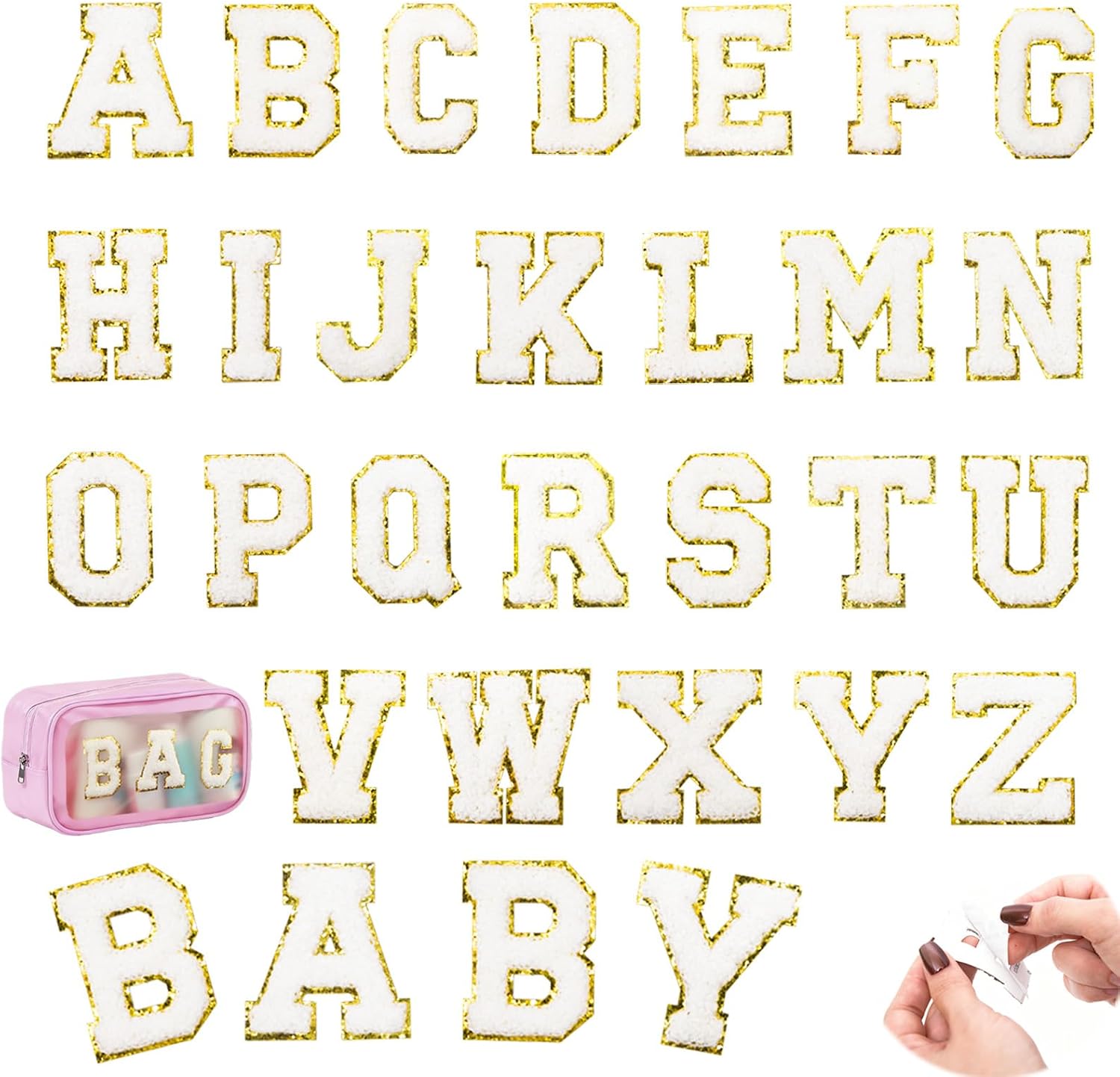
Letter patches on clothing is the single most common use, and also the one people overthink. The good news: if the fabric is flat and the colour contrasts, you are ninety percent of the way there. The rest is just picking the spot. I have patched more thrift-store jackets than I can count, and the projects that look expensive all follow the same three rules — below is the map, with links out to the specific garment guides when you want the exact spot and letter count.
The one rule that decides if it works
Flat fabric + contrast. That is it. A letter patch reads because the raised chenille catches light against a matte surface, and because the colour of the letter fights the colour of the fabric. Put a navy letter on a cream hoodie and it is legible from across a room. Put a black letter on a black jacket and it vanishes. The colour combination guide lists exactly which base-and-letter pairs read; the short version is “match the letter to the fabric block it sits on, not to the whole outfit.”
Which garments love letters (and how many)
| Garment | Best spot | How many letters | Guide |
|---|---|---|---|
| Jacket | Back, chest, sleeve | 1–name | jackets |
| Hoodie | Chest, sleeve | 1–6 | hoodies |
| Jeans | Back pocket, hem | 1–3 | jeans |
| Tee / shirt | Chest, hem | 1–4 | clothing |
| Bag / tote | Flat front panel | name | bags |
| Cap / hat | Front panel | 1–2 | hats |
The full, garment-by-garment breakdown — exact spots, letter counts, and the curve-and-seam traps — is in the per-garment formulas guide. Use this table to pick where, and that guide to measure.
The size that fits clothing: 2.17 inches
Every YTONN letter is about 2.17 inches tall. On clothing that number is the sweet spot: a single initial on a hoodie chest looks deliberate, and a six-letter name on a jacket back spans without crowding the armholes. Go bigger and it reads cartoonish; go smaller and it disappears into the weave. For names longer than four letters, sketch it on paper at that size first — or use the layout previewer — so you don’t discover the word runs into a seam after the heat is already on.
Application in ten seconds
Peel the backing, stick the letter on clean flat fabric, hold a few seconds so the adhesive grabs, cover with a thin cotton cloth and press a warm iron for about ten seconds — no steam, no sliding. Let it cool before you test an edge. The glue holds it in place while you heat, which is the whole reason a self-adhesive patch fails less than a pure iron-on. The fabric-by-fabric walkthrough is in the complete application guide.
Where people mess up
- Wrong contrast. A tonal letter on a tonal garment is invisible. Pick the letter colour for the block it sits on.
- A curve or seam. The corners lift on the first bend. Flat panels only — never the elbow, the knee, or over a zip.
- Too many letters. A name across a chest is great; a sentence is not. Restraint is what makes it look bought, not homemade.
- Scorching the gold trim. The metallic border is fuzzy and hates direct heat. Always press through a cloth.
The set to buy
A 26-piece set gives one of every letter A–Z in one colour; a 52-piece multicolor set gives two of every letter in five colours, which matters the moment a name repeats a letter (MOM needs two M’s). For a single garment, the 26-piece is plenty. For patching a jacket, a hoodie and a tote, the multicolor box is the one I reach for.
Frequently asked questions
What clothes can you put letter patches on?
Any flat-fabric garment: jackets, hoodies, jeans, tees, tote bags and caps all take them well. The rule is flat fabric plus contrast, so avoid curves, zips and thick seams where the corners would lift. Cotton, denim and canvas are ideal; smooth synthetics need a more careful press.
What size letter patch is best for clothing?
Around 2.17 inches tall. At that size a single initial on a hoodie chest looks deliberate and a six-letter name on a jacket back spans without crowding the armholes. Bigger reads cartoonish and smaller disappears into the weave.
Do letter patches ruin clothes in the wash?
No, if applied properly. Wash cold and inside out, and never iron directly on the gold trim. A stuck-and-pressed patch survives far more washes than most shirts deserve; if a corner ever lifts, a ten-second re-press through cloth fixes it.
How many letters should I put on a shirt or jacket?
One initial or a short name reads as intentional; a full sentence does not. On a chest, one to four letters. On a jacket back, a name or a single large initial. Restraint is what makes the result look bought rather than homemade.
Self adhesive or iron on for clothing?
Self-adhesive. It has a peel-and-stick glue layer under the iron-on film, so the letter stays put while you heat it, which is why beginners fail less. On cotton, denim and canvas it holds as well as or better than pure iron-on.
Can I put letter patches on stretchy fabric?
Avoid heavy stretch. A little give is fine on a cotton tee, but leggings, activewear and four-way stretch panels fight the adhesive on every move and the corners lift. Use stable woven fabric for a permanent result.
What colour letter patch should I choose for my clothes?
Pick the letter colour for the fabric block it sits on, not the whole outfit. Navy or black letters on cream and white; white or gold on navy and black. The colour combination guide lists the pairs that read from across a room.
Shop the A–Z self-adhesive chenille sets
Dense dimensional chenille with a metallic gold embroidered border, a peel-and-stick adhesive backing, and an iron-on layer for permanence. Pick the set that fits your project.
Related reading
- Letter patches for bags — totes and backpacks
- Letter patches for hats — one bold initial
- Letter patches for jackets — varsity placement
- Letter patches for jeans — pocket and hem
- Letter patches for hoodies — chest and sleeve
- Self-adhesive chenille sets — the peel-stick-press A-Z set
- Letter patch types & uses — chenille vs embroidered vs iron-on
- All chenille letter sets — the colourways side by side
- The complete application guide — every fabric, every method
- Per-garment formulas — denim, hoodies, totes, caps, sneakers
- Creative placement ideas — fourteen spots past the chest
- Varsity letter guide — placement, size and spacing
- Preppy letter-patch style — the Ivy League look, decoded
- How to decorate clothes with patches — a starter walkthrough
- Colour combination guide — what base plus what letter reads
Chenille Patches for Clothing: What Actually Works
Chenille patches for clothing work best on flat, sturdy panels — a jacket back, a chest, a denim pocket, a canvas tote. The raised pile adds texture without adding much weight, so it sits comfortably on a worn-in tee or hoodie. The one fabric family to be careful with is stretchy knit: the panel moves, the patch does not, and the edges can lift over time.
For everyday wear, peel-and-stick is enough for a first fit, then a short low-heat press locks it in. Wash inside out on cold and skip the dryer if you want the pile to stay fluffy for years. If you are mapping out where each letter should go, the per-garment formula guide covers jacket, jeans, hoodie, tote, cap and sneaker placements.