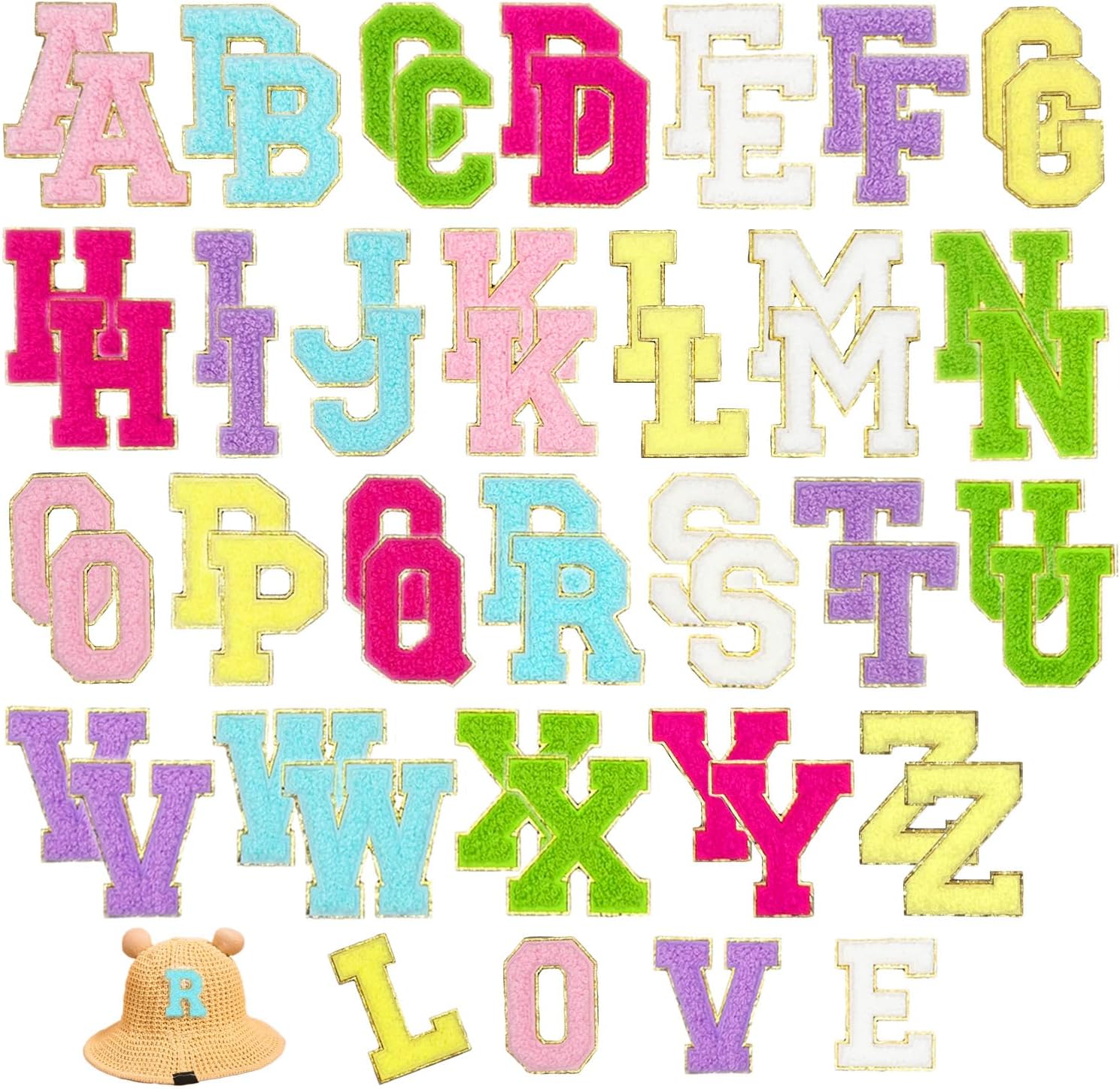
“Letter patches” is a bigger tent than most people think. Walk into any craft aisle or Amazon search and you will meet chenille, embroidered, iron-on, self-adhesive, woven and the occasional rubbery PVC badge — and they are not interchangeable. If you have ever bought the wrong one and wondered why it would not stick, this is the guide I wish someone had handed me first. Below: what each type is, where it shines, and how to pick.
The five types you will actually meet
Chenille. The fuzzy, raised, slightly old-school one. A chenille letter is built from a soft pile that catches light, so even a tonal black-on-black letter stays visible through texture. It is the varsity / prep / streetwear default and the one this whole site is built around. Heavier than the others, dimensional, and it reads “expensive” when placed with restraint.
Embroidered (flat). A flat patch with the letter stitched into the surface, no raised pile. Crisp and thin, great for fine detail and small letters, but it lacks the plush look people actually mean when they say “chenille.” Choose it when you want sharp, not fuzzy.
Iron-on. This describes the application method, not the look. An iron-on patch ships with a heat-activated film and nothing else, so it lives or dies by your iron temperature and pressure. It can be chenille, embroidered or woven underneath. The catch: skip the heat or rush it and it lifts.
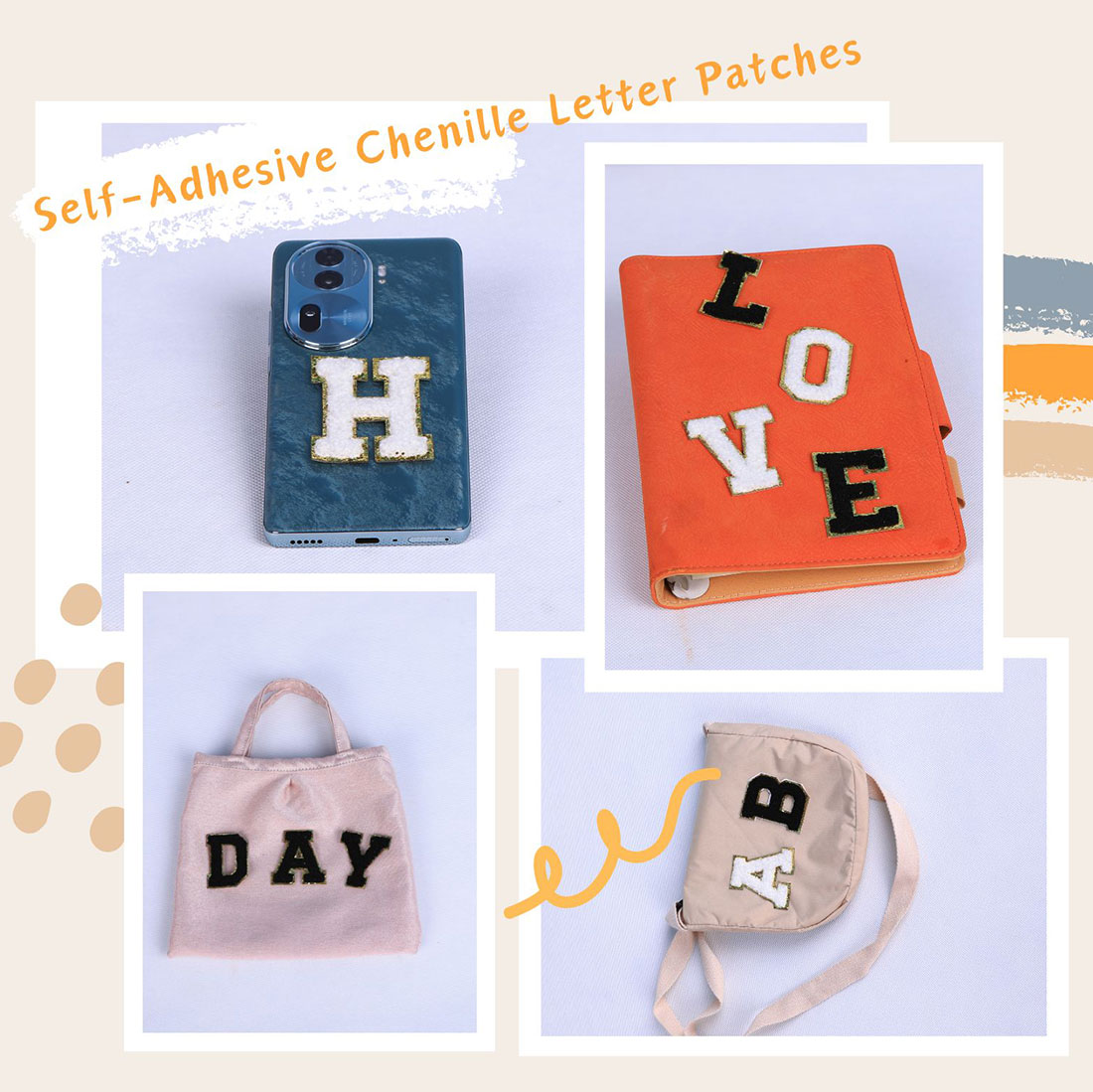
Self-adhesive. Also a method, not a look. A self-adhesive patch adds a peel-and-stick glue layer under the iron-on film, so it grips the moment you place it and the heat just confirms it. Lower failure rate than pure iron-on. Our self-adhesive chenille sets are this type — chenille look, sticky backing.
Woven / PVC. Woven patches are thin and detailed like embroidered but flatter; PVC is a rubbery, weatherproof badge. Both are niche for clothing letters but common on bags and outdoor gear where you want a wipe-clean surface.
Type vs method, quick table
| Type | Look | Apply by | Best use |
|---|---|---|---|
| Chenille | Fuzzy, raised | Self-adhesive or iron-on | Jackets, caps, varsity, prep |
| Embroidered | Flat, crisp | Iron-on or sew | Fine detail, small letters |
| Iron-on (method) | Any | Heat only | Quick no-sew, if you iron well |
| Self-adhesive (method) | Any | Peel-stick then heat | Beginners, low failure rate |
| Woven / PVC | Thin / rubbery | Sew or heat | Bags, outdoor gear |
How to choose by fabric
Cotton, denim, canvas — any of the heat methods work, and chenille looks best here. Synthetics like polyester blends grip less, so a self-adhesive backing plus a careful press beats pure iron-on. Leather and waterproof shells are the awkward cases: skip them unless you are willing to sew, because glue and heat both struggle on a non-porous surface.
How to choose by use
- Clothing (jackets, hoodies, jeans, tees): chenille, hands down, for the look people actually want. See the clothing decoration walkthrough and the per-garment formulas.
- Bags and totes: flat surfaces love letters. A name on a tote front is the easiest, highest-impact project there is.
- Hats and caps: one bold initial on the front panel. Read the application guide first — caps are where the gold trim gets scorched.
- Gifts and teams: matching initials or a short name across a group. The multicolor set covers the colour matching without buying five boxes.
Alphabet sets vs single letters
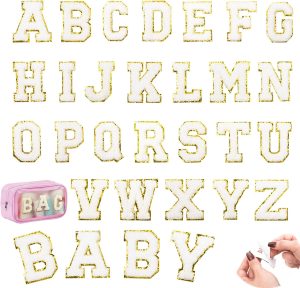
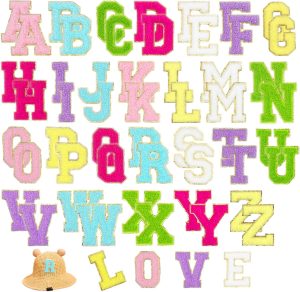
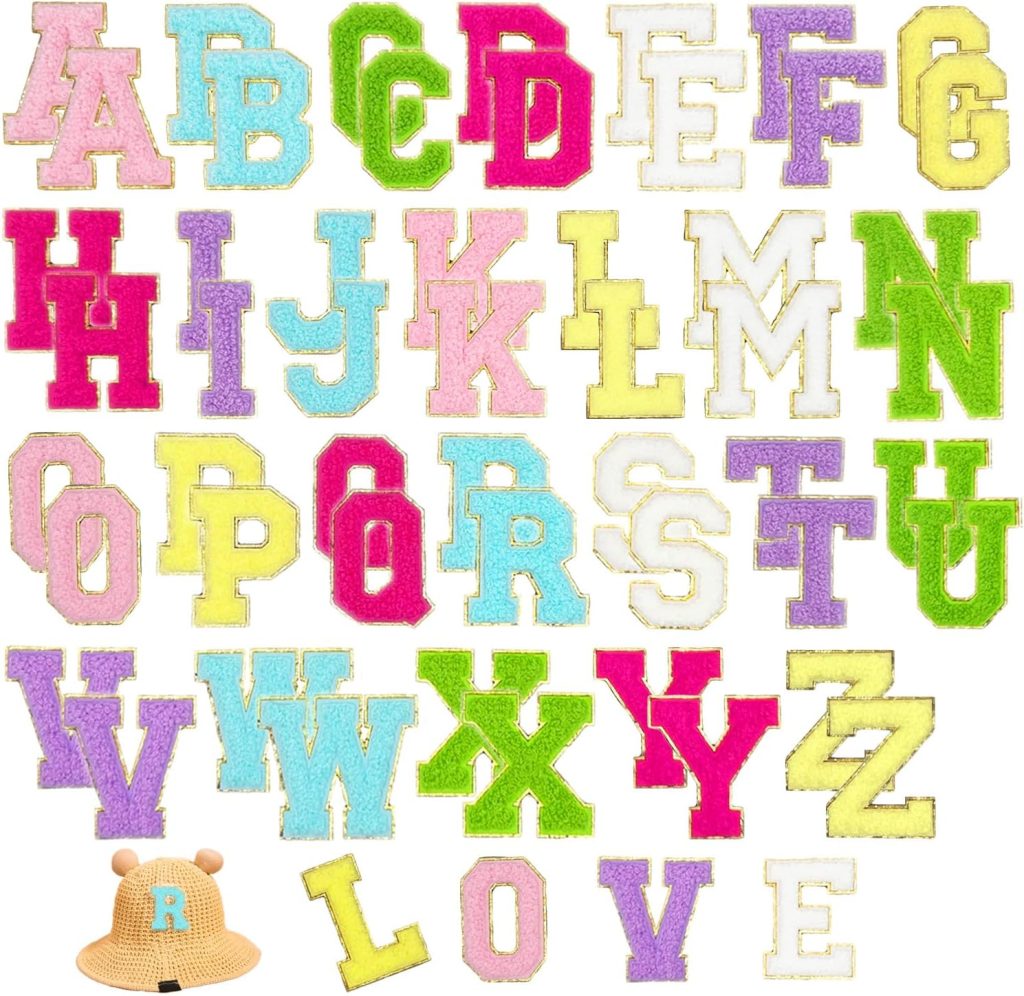
Most people should buy an A–Z set, not loose singles. A 26-piece set gives you one of every letter for roughly the price of a coffee, and a 52-piece multicolor set gives two of every letter in five colours — which matters the moment you spell a name with two of the same letter (HELLO needs two L’s). Buying singles only makes sense if you are personalising one specific word in bulk.
The mistake everyone makes
Buying on “iron-on” alone and ignoring the fabric. Iron-on is a method, not a promise — on a slippery poly blend it lifts no matter how long you press. If you are unsure, buy self-adhesive chenille: the glue places it, the heat locks it, and you are not gambling on your ironing. Everything else — colour, placement, washing — is covered in the linked guides; the type choice is the one decision that actually breaks projects.
Frequently asked questions
What is the difference between chenille and embroidered letter patches?
Chenille is fuzzy and raised, built from a soft pile that catches light, so it reads as dimensional and a bit old-school. Embroidered is flat with the letter stitched into the surface: crisper and thinner, good for fine detail and small letters, but lacking the plush look most people mean by chenille. They are different looks, not just different brands.
Is iron-on the same as self adhesive?
No. Iron-on describes a patch with only a heat-activated film, so it lives or dies by your iron. Self-adhesive adds a peel-and-stick glue layer under that film, so it grips the moment you place it and the heat just confirms it. Self-adhesive fails far less often for beginners.
Which letter patch is best for clothing?
Chenille, for the dimensional varsity look most people actually want on jackets, hoodies, jeans and tees. On cotton, denim and canvas any heat method works; on polyester blends a self-adhesive backing plus a careful press beats pure iron-on.
Can I use letter patches on a tote bag or a cap?
Yes, and they are ideal there. A tote front is the easiest high-impact project (a name reads like signage), and a single initial fits a cap front cleanly. Caps need care around the gold trim, so read the application guide before your first one.
Should I buy an A-Z set or single letters?
An A-Z set. A 26-piece set gives one of every letter cheaply, and a 52-piece multicolor set gives two of every letter in five colours, which matters the moment a name needs a repeated letter like the two L’s in HELLO. Singles only make sense for bulk-personalising one specific word.
What surfaces should I avoid putting letter patches on?
Heavy curves, zips and thick seams lift the corners, so use flat fabric. Non-porous surfaces like leather, nylon and waterproof shells grip glue and heat poorly, and should be sewn rather than stuck if you want them to stay.
Do letter patches come off in the wash?
Properly applied chenille patches do not. Wash cold and inside out, and never iron directly on the gold trim. A patch that lifts after long abuse can be re-pressed through a cloth in ten seconds. The full care steps are in the application guide.
What size letter patch should I use?
Around 2.17 inches suits most garments: a single initial on a cap, a name on a tote, a word on a jacket back. Bigger looks cartoonish and smaller disappears. For names longer than four letters, preview the true scale before you heat so you don’t crowd the seams.
Shop the A–Z chenille letter sets
Every set is dense dimensional chenille with a metallic gold embroidered border, a strong self-adhesive backing, and an iron-on layer for permanence. Pick the size that fits your project.
Related reading
- Self-adhesive chenille sets — the peel-stick-press A-Z set
- All chenille letter sets — the colourways side by side
- The complete application guide — every fabric, every method
- Decorate clothes with patches — a starter walkthrough
- Letter patch types & uses — chenille, embroidered, iron-on, self-adhesive compared
- Letter layout previewer — see your name at true 2.17-inch scale before you buy
- Preppy letter-patch style — the Ivy League look, decoded
- Creative placement ideas — fourteen spots past the obvious chest
- Varsity letter guide — placement, size and spacing
- What chenille embroidery is — the raised-pile technique, explained
- Colour combination guide — what base plus what letter reads
- 5 style recipes — from quiet minimalist to loud streetwear
- Mixing chenille with other elements — what holds up, what does not
- 5 ways patches go wrong — and the two-minute fix
- Per-garment formulas — denim, hoodies, totes, caps, sneakers